Journalism Final

Tweet. Post. Blog. Share. Like. All verbs that have become very popular within the past decade of society. All verbs that will continue to grow in prevalence as time moves forward. The source of their significance? Social media. Defined as a place as websites or applications in which people can share content quickly and efficiently, social media has made its mark on almost every aspect of our everyday lives. It provides individuals all across the globe with forums in which they can communicate by removing communication boundaries. These new platforms were designed with the intent of fostering creativity and collaboration, allowing individuals to build community amongst people on a broader scale and share their thoughts, ideas and experiences with the world. Globally 4.5 billion people access the internet, and of that immense population, 3.8 billion people use social media. Put into perspective: roughly 50% of the world’s total population are operating on social media. Tweeting, posting, blogging, sharing, liking.
As the extensiveness of this form of networking continues to grow, so does the controversy behind it’s existence and role in our everyday lives. Questions arise from people regarding the initial intent of these platforms, versus the actual purpose they serve in society. As an adamant social media user myself (yes, millennial guilty as charged) I have always been curious as to what the actual effects social media has on daily life. This post will attempt to lay out that effect by focusing on the pros and cons of social media in 3 separate sectors of life: politics, economics, and society as a whole. I hope by the end of this you will gain an understanding of not only the opportunities social media provides, but the ramifications that are included in this mass networking system.
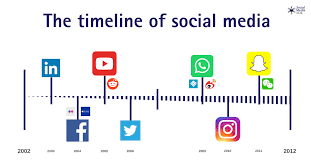
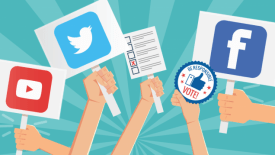
However, before we get into the significance social media plays in today’s society, it is important to understand the history of social networking entirely. Contrary to popular belief (and the image I have inserted just to the left of this text), social media didn’t start with LinkedIn and Facebook. The groundworks for social networking began hundreds of years ago when communication across large distances originated. Here is a brief timeline of the development of social networking into social media:

  • The earliest postal system was created in 550 B.C by the King of Persia, Cirus the Great. From there, the presence of mailing systems continued to grow.
  • By the mid 1800’s the telegraph was developed by Samuel Morse, which allowed messages to be transmitted across large distances much faster than postal systems
  • 1867, Alexander Graham Bell invented the telephone which allowed people to communicate across distances promptly.
  • In the 1940s the first super computer was invented, which evolved into personal computers in the 1970’s
  • In 1969 the first ever network link was created
  • 1978 was the first ever email
  • 1997 the creation of the first true social media site: Six Degrees

For a lot, the creation of social media in the late 20th century was considered to be a turning point in communication, networking, and media. The shift in method of communication triggered a transition from analog to digital methods that allowed for the convergence of media, communication and computing industries. In other words: the creation of social media joined together a lot of components of life into one networking system. In the beginning parts of the 21st century social media increased greatly in popularity, largely due to the development of platforms like myspace and facebook. After its creation in 2004, Facebook became the world’s most popular social media platform by 2008. As of 2010, Facebook had more than 500 million users. Today, the amount of social media applications is large, inclusive with platforms that cover every aspect of daily life. However, the “Big Six” social media platforms are: Pinterest, Twitter, Facebook, Instagram, Snapchat, and LinkedIn.
Now that we have a basic understanding of the background of social media, it’s time to tackle the effects it has on varying aspects of life. First up: Politics.

Relevance of social media has grown immensely since it’s creation, and part of the reason it has is because it is informative. It allows individuals to receive and gain an understanding for knowledge they otherwise would not have access to. But, does it really? Most notably through the platforms Twitter and Facebook, Social media has played a huge part in politics these past 10 or so years, especially during campaigns. In 2012, 2 in 5 Americans reported that they used social media for political purposes during the election. Beit to gain information or insight on a candidate, or to promote those they have chosen to support, there was an increased reliance on social media for political views. Now, social media can be an effective tool for politicians to use, especially during elections. On the positive side it allows for the recruitment, motivation and empowerment of supporters. It provides an opportunity for candidates to reach a broader range of people, and can be utilized to provide feedback and analytics for politicians. However, on the flipside social media can be a playground for fake news. The creation, development and sharing of fake information can potentially ruin an entire campaign for a candidate. Additionally, social media can lead to issues with professionalism amongst those in political power. As we have seen recently, these platforms can allow for the distribution of memes and inappropriate, impulse statements. They lack the professionalism that formal conferences and statements have.

The second sector of life that is heavily influenced by social media is the Economy. In my opinion, social media provides for more opportunities than obstacles in the economic sense. The use of networking through these platforms allows for individuals to build community amongst themselves. This sense of collaboration can often turn into innovation once like-minded people have connected. It allows for the foundation to be built for a participatory economy, meaning individuals are actively being both consumers and producers amongst themselves. Additionally, social media facilitates the growth and development of networks amongst employers and employees. This is most notably done on the platform, LinkedIn. LinkedIn is a database in which you post your profile, which is inclusive with past job experience, a resume, reviews from past employers, interests, and other characteristics about yourself. From there, you make connections with people, and build your network. The expansion has led millions to job opportunities. On a business-consumer level, social media provides immense marketing opportunities. Through these platforms companies can promote the name of their business/brand, as well as the products of services they provide. It permits a broader reach of marketing to consumers, while also allowing for an easier ability to locate target markets. However, while I believe them to be few, there are some cons to social media for businesses. Like politics, there can be the spread of false information surrounding businesses and brands, which can tarnish the entire reputation of a company. Social media marketing can be tedious and time consuming, especially if the correct number of interactions isn’t being met.
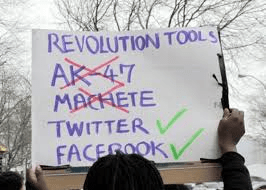
Now, for the last proponent of the effects of social media we’ll focus on society as a whole. How are people affected on a personal level? What repercussions do these platforms have on health, both mentally and physically? What pros and cons does it offer for daily life? To begin with, individuals who support social media are quick to highlight the fact it offers platforms in which people can access news quicker and more efficiently. In fact, 59% of twitter users and 31% of facebook users admitted to turning to these platforms for breaking news. However, of that amount, 64% of the twitter users reported that they have come in contact with false information in their time on the app. 16% admitted to sharing the news they encountered.
In terms of academics, heavy social media users have proven to have lower grades in school. However, social media allows for students to discuss academic topics through the use of its platforms. It can be used as an educational tool, not only for high school students, but for people across the world. Social media can be used to raise awareness for injustice, most notably done in the United States with the #BlackLivesMatter movement. It can be used to reduce stigma and raise awareness for issues like sexual assault, in the MeToo movement. However, it can be addictive and can decrease actual human interaction. It can create delusion through comparison, which can result in body image and self-esteem issues.
As of today, social media plays a viable role in almost every aspect of our everyday life and all evidence points towards an increase in that role. Whether you support it or not, social media will continue to grow in prevalence amongst a multitude of components of life. The facts prove that there is no question in that reality. So what should we question? I believe going forward it is important to focus on the questions that matter. How do we work towards decreasing the cons social media provides? How do we do so in a manner that allows for use to sustain or increase the pros? What’s next? If not, the repercussions of these networks will continue to grow, just as their presence does. And as the fake news spreads and body image issues continue to arise, we’ll continue to be stuck in the same spot… Tweeting, posting, blogging, sharing, liking.
Throwing Shade

Photo Credits: Google Images

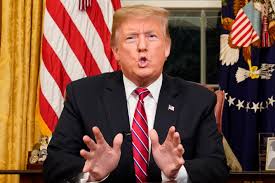
On January 8th, 2019, President Trump delivered a prime-time speech to the nation. The speech lasted roughly nine minutes and 30 seconds, and focused entirely on components of border control. Within the speech, President Trump highlighted the main reasons for an increase in border control resources. Inclusive with the statistics predicated on the existence of illegal immigrants in the country, the address outlined reasons why the current methods and resources provided were not sufficient, as well as what monetary resources were required to increase the efficiency and success within the United States border control. He requests $5.7 billion to be given to Homeland Security, and verifies that this amount of money will effectively assist in border control methods. His speech was primarily directed at the Democratic party, as a call for them to take action themselves and allocate the resources necessary for what he believes will assist in border control. In simpler terms: President Trump was directly throwing shade, a phrase used to describe a some-what subtle way of showing disrespect or distaste for another, at the Democratic party. 

The purpose of this speech, to influence the Democratic party to act, creates a very persuasive component to this address. Throughout the speech, President Trump utilizes logos as his main method of persuasion. His rhetoric is predominately centered around the statistics he is offering, which he adds in hopes to show the reasoning behind his purpose. Additionally, he focuses heavily on the relevance of this issue. Speaking in the present tense, he uses strong words and phrases, like “growing humanitarian and security crisis at our southern border” (Trump J.). In addition, his speech serves the purpose of appealing to the American people. I believe this is in hopes of gaining the support of the people, and thereafter translating that support into a form of coercion for the Democratic party. 

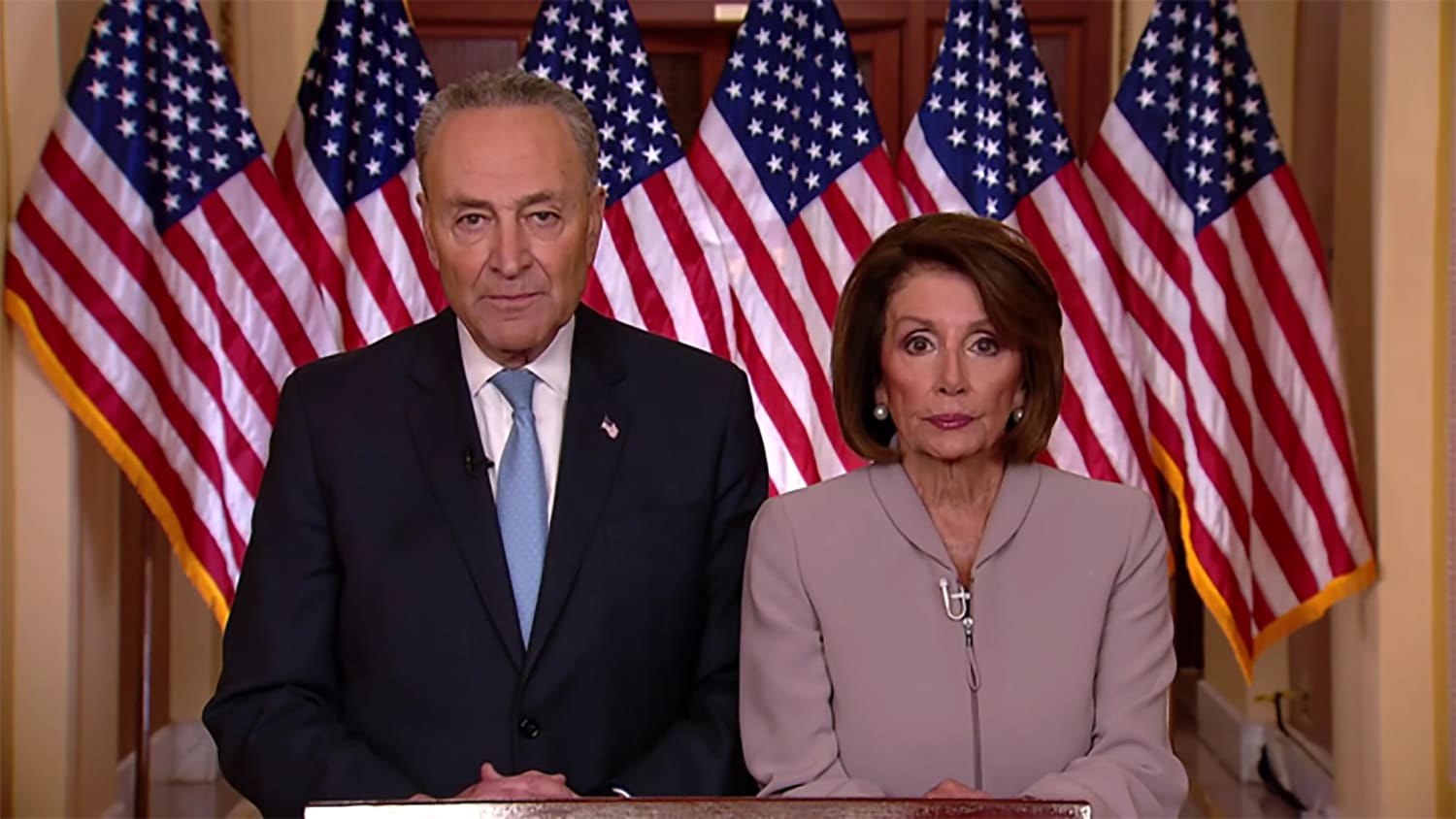
Read: Pelosi and Schumer's response to Trump's border speech
Photo Credits: Google Images

The speech raised controversy across the country, as do a lot of addresses and decisions made by President Trump. The Democratic party almost immediately released a statement in response to demands made by the commander in chief. Speaker of the House, Nancy Pelosi, as well as Senate Minority Leader, Chuck Schumer, issued a rebuttal the following day. During which, both leaders criticized Trump’s method of thinking. As the speech was done during the time period of the government shutdown, they questioned where his priorities lied, as this was the first national address he had released since the shutdown had begun. Additionally, they rejected his request for the $5.7 Billion. 

There were several instances in which people did not agree with both the statement, and the reasons behind it. For example, a New York Times article highlighted everything wrong with what was said. The article called Trump “wall-obsessed”, and also made comments on his past experience with sexual assault in response to a comment made by him in relation to sexual assault in Mexico. In another article, Time Magazine slams the speech entirely. focusing their rebuttal on the “facts presented” by Trump during the address; the piece responded to the claims regarding violence of illegal immigrants, as well as his past insistence of Mexico paying for the wall. There was support given for the speech, primarily by members of the Republican Party, but the overwhelming majority of journalists and people exhibited negative response.

I, myself, understood the speech but could not disagree with what Trump was saying more. I am not a supporter, never have been a supporter, and never will be a supporter of the current commander in chief. However, still I do believe that a lot of what is released in the media has negative connotation regarding Trump’s words and actions. But in my opinion it is allocated properly. Politicians receive more negative media than anyone else in society. It has happened to every president, and will probably continue to happen to every president. I think the media frame displayed was appropriate and an accurate interpretation of Trump’s choice.

Social Media

The entertainment industry is likely one of the sectors most affected by the growing use and development of social media. What makes this industry so special, is the varying aspects that compile to form it, and therefore are individually affected by social media. Some of these independent components i

includes

Photo Credits: Google Images

actors and actresses, movies and shows, directors, television companies, and even production crews. Social Media has changed the way these individual factors can market themselves, and how they are perceived by the general public (Joe). In a way, this almost adds pressure to the individuals involved, to preserve their public image. When speaking in particular about television companies and programs utilizing social media there are several norms these companies use to maintain good use of social media, including: posting content geared around the cast, as well as content from “behind the scenes” (Gurevich). These methods allow for the audience to believe they have a sense of unrestricted access, which allows them to stay engaged. Companies also utilize trailers, and posts with foreshadowing to further this engagement, for example: a company will post a clip from an upcoming episode that has not yet premiered.  HBO, which stands for Home Box Office Incorporated, is the largest Pay-TV channel in the United States. Founded in 1972 by another television company, HBO had a slow start to the company. They began to make profit in 1977 and have been expanding ever since (Funding Universe). As an entertainment company, it is important for HBO to utilize social media as a tool to promote and market their product of entertainment. 

HBO utilizes social media excellently, as a third party marketing tool. They do several things in particular that allows them to engage with their audience in the best ways. For one, they chose to amplify the excitement fans have surrounding series’ they release (Beer).  They do this by beginning conversation on social media, and posting content that is intriguing to fans, allowing them to sustain the conversation. Additionally, they increase the excitement by posting snapshots into unreleased episodes. These are clips and sometimes images, that are foreshadowing. This content produces social media conversation naturally and allows for fans to speculate regarding upcoming content. 

Photo Credits: google images

Additionally, they lower the barrier of entry to participation in social media regarding HBO-related content. This means individuals can participate as much as they want, with any level of knowledge regarding the show. This expands the use of social media content, as well as the level of participation of viewers (Beer). 

The social media content produced and facilitated by HBO is the accounts HBO runs. They utilize platforms like Instagram and Twitter to release this content, and do so effectively using their methods. These platforms also prove to be the most effective, as they allow for the most shares amongst 

Photo Credits: Google Images 

viewers. However, one of the cons of using social media on these platforms is the lack of filter for content viewers post. For example an individual can binge watch a season or simply watch an episode before another, and spoil the content for hundreds. 

Overall, I am genuinely impressed with the way HBO utilizes social media to market their entertainment. However, if I could make two suggestions to their marketing department regarding the use of social media, I would suggest:

  1. Suggesting Limited Content of HBO-related shows:

I would put this in place to try to decrease the number of spoiler posts that circulate during the duration of television series

  1. Posting more content with cast:

More content regarding the individuals who act in the shows would allow for an increase in audience participation in the show. By allowing them to seemingly connect on a more personal level with the cast, this decision could drastically increase their engagement in the show. 

Sources:

Beer, Jeff. “Winter Is Always Coming: How HBO Wins The Game Of Social Media.” Fast Company, Fast Company, 18 Apr. 2014, http://www.fastcompany.com/3029257/winter-is-always-coming-how-hbo-wins-the-game-of-social-media.

Gurevich, Alex. “Social Media Marketing in the Entertainment Industry: 10 Ways to Win.” Hearst Bay Area, marketing.sfgate.com/blog/social-media-marketing-in-the-entertainment-industry.

“Home Box Office Inc.” FundingUniverse, http://www.fundinguniverse.com/company-histories/home-box-office-inc-history/.Joe, Michelle. “How Social Media Has Changed The Entertainment Industry.” Social the Lifestyle Magazine, 3 Nov. 2018, socialifestylemag.com/2018/11/how-social-media-has-changed-the-entertainment-industry/.

Through Pictures: The Development of the Coronavirus

Hey Guys, and welcome back to my journalism blog! For this post I have chosen to focus on what has been one of the fastest growing controversies and concerns for the world, these past few months: The Coronavirus. Since it’s initial outbreak in Wuhan, China, the virus has left thousands dead, tens of thousands sick, and millions in a state of panic, shock and concern. Governments across the world have classified the outbreak of the disease as a reason for a state of emergency, given the severity of its’ danger levels. Below I have disclosed a brief timeline of events surrounding the coronavirus and the effect it is having on individuals across the world:

December 31st

The government in Wuhan, China reported that their health facilities have been treating several cases of an “unknown” virus. During this time there was no clear clarification on its origins, level of severity or method of contamination. 

January 11th

China reports its first known death from the Coronavirus. The death was reported as  a 61-year old man, and came during a time in which thousands of people were traveling to and from this region, due to holidays. 

January 20th

Confirmed Cases were announced in other countries, likely from traveling to areas in which were already infected. The first man in the United States to have symptoms was announced in Washington, as a 31-year old man displayed such after traveling to Wuhan. 

January 23rd

The Chinese government closed off the city of Wuhan, halting all transportation to and from the city of nearly 11 million. There was hope that this would decrease the rate of contamination outside of the city. 

February 2nd

The first death was announced outside of China, in the Philippines. At this time, over 300 people have already died within China. 

March 1st 

The first death in the United States was announced, as a man in Rhode Island fatally became victim to the disease. 

I chose the Coronavirus as my topic for this blog because, quite frankly, the disease is a concern for millions across the globe. It is very interesting to dive into what makes this disease tick, as well as the reactions from around the world. Through pictures, I will attempt to convey the severity of this epidemic, as well as showcase some of the effects it has had on people. 

This photo is one I would consider to be a portrait shot. Although it encompasses a variety of people, the focus seems to be the women in the middle. Shot in china, the picture depicts the level of severity of the disease by showcasing the precautions taken by individuals to avoid contamination of the disease. I, myself, have seen masks worn by students across my college campus. Whether it be for Coronavirus or other diseases, it shows the degree in which people are handling the virus.

Photo Credits: NY Times  

This picture is a display of the city of Wuhan prior to the outbreak of the Coronavirus, and following the announcement of the disease. The bottom portion shows the city before, buzzing with people and traffic. The top satellite capture is the city following the announcement, almost deserted in a sense. A scene setter photo, this image depicts the severity of the disease, and the effects it has had on the people in its region of origin, and most contamination. 

Photo Credits: Business Insider

Photographed in a market located in Wuhan, China, this medium shot displays an image of people shopping for food. While everything seems to be ordinary, one thing stands out: the presence of masks. This shot depicts the concern of people by showcasing a level of precaution, even during their everyday lives. Narrowing in on the events that are happening not only within Wuhan, but across the world. 

Photo Credits: Google Images. 

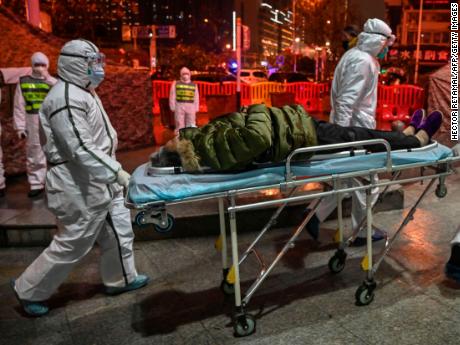
This photograph shows medical respondents wheeling, what looks to be, a victim of Coronavirus towards a hospital. The Contamination suits the individuals have on, as well as the people in the back, displays the severity of the disease, as the surrounding people are avoiding in and all contact with the contaminated

Photo Credits: CNN

This photo truly captures a story. The image depicts two individuals, who look to be like parents, covering their child’s face with a mask to prevent contamination from the disease. The photo emphasizes the levels in which people are going to protect themselves and those they love.

Photo Creds: CNN                                      

The images I have chosen, as well as the arrangement, combine to create the story behind the Coronavirus. I begin by introducing the main topic of the virus: People. I then transition into the effects the virus has had on people, focusing mainly on the area in which it has most affected, Wuhan. The picture depicts the depth in which the effects of the disease have run, even from a macroscopic level. My third and fourth picture depict the severity of the disease by outlining individuals in action, as well as a medium shot to display how people are reacting to the disease. This transitions to a semi-personal level, as I am now again focusing on people.The last photo depicts the story on a very personal level, showcasing an emotional lense into the story of Coronavirus. 

I believe that we are transitioning into more photo-dependent journalism. This transition allows the story to be told through pictures and interpreted as such, and I believe this method allows for a deeper effect. A picture is worth a thousand words. Going forward I feel like there are a few ethical dilemmas this process could run into. Taking photos without consent of the individuals depicted can sometimes be a problem, however, it is important that for real news there are real situations photographed, not staged. It will be interesting going forward to see how photography affects journalism in different ways!

Until next time! -Zoe Young

About the Author

Hello!

My name is Zoe and I am a freshman at the University of Maryland. I am publishing this blog as a part of my Journalism class. To begin with, I am going to be sharing this post in hopes that you can gain a better understanding about me!

To begin with, I grew up in Des Moines, Iowa, a bit far away from Maryland. Growing up in the midwest wasn’t always easy (lack of entertainment), but it was something I throughly enjoyed. To me, the midwest had some of the nicest people I had ever encountered, and being surrounded by that culture allowed me to adopt some of those core values! Additionally, growing up in Des Moines allowed me to be closest to my imediate family; my mom and dad, 4 siblings, and both sets of grandparents. Des Moines is where I met some of my closest friends and mentors, and it also gave me the opportunity to learn and grow in one of the most important aspects of my life: Basketball.

photocreds: Zoe Young

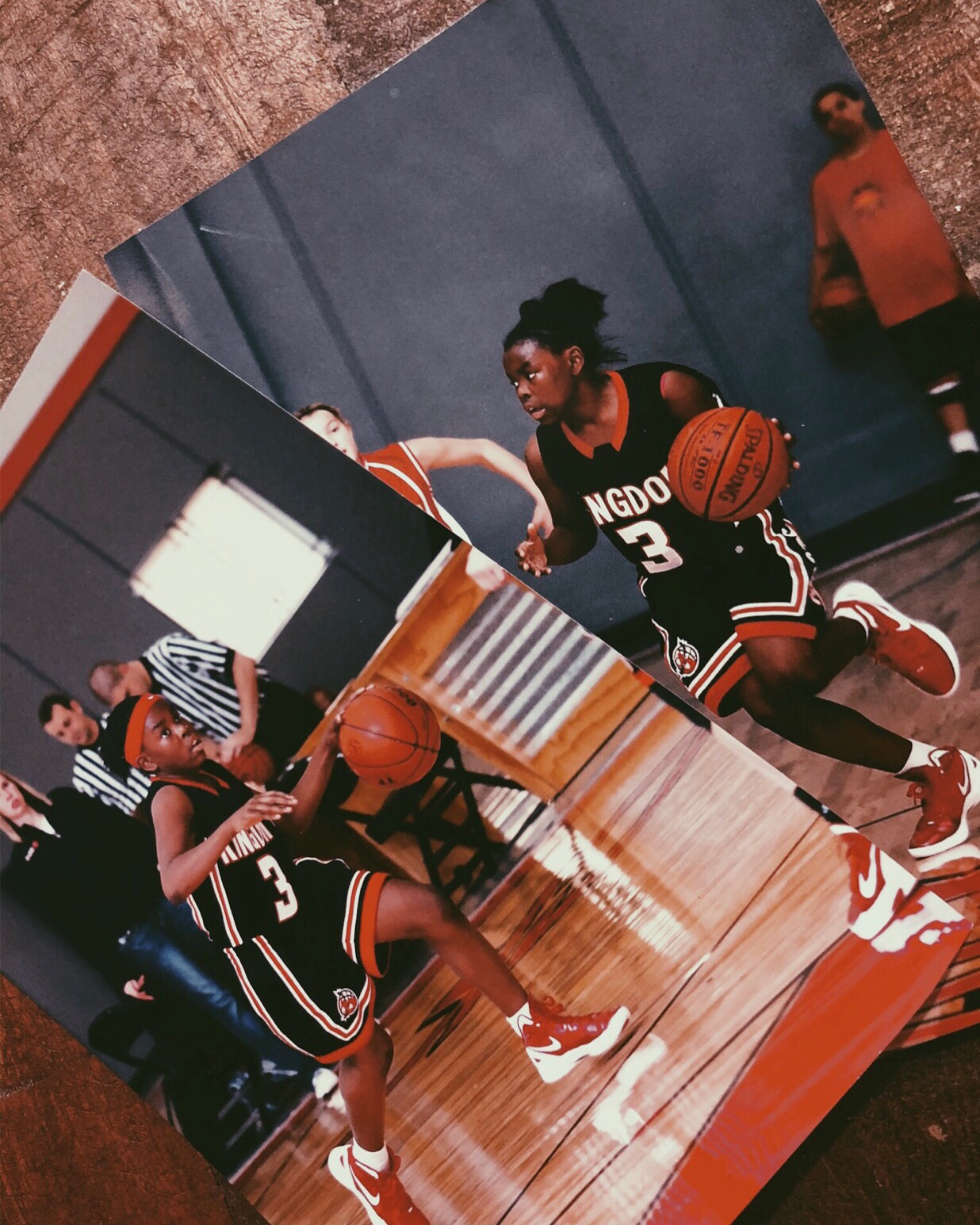
I began playing basketball in the 1st grade, however, it wasn’t something I always enjoyed. Prior to playing basketball, I ice skated. Ice skating was something I throughly enjoyed, doing it since an extremely young age. After quitting Ice Skating for personal reasons, I began to play basketball. Beginning in the YMCA league, I quickly realized that basketball was very different from ice skating. For one, ice skating was an individual sport, whereas basketball forced me to cooperate with others– something I didn’t particularly enjoy.

Photo Creds: Zoe Young

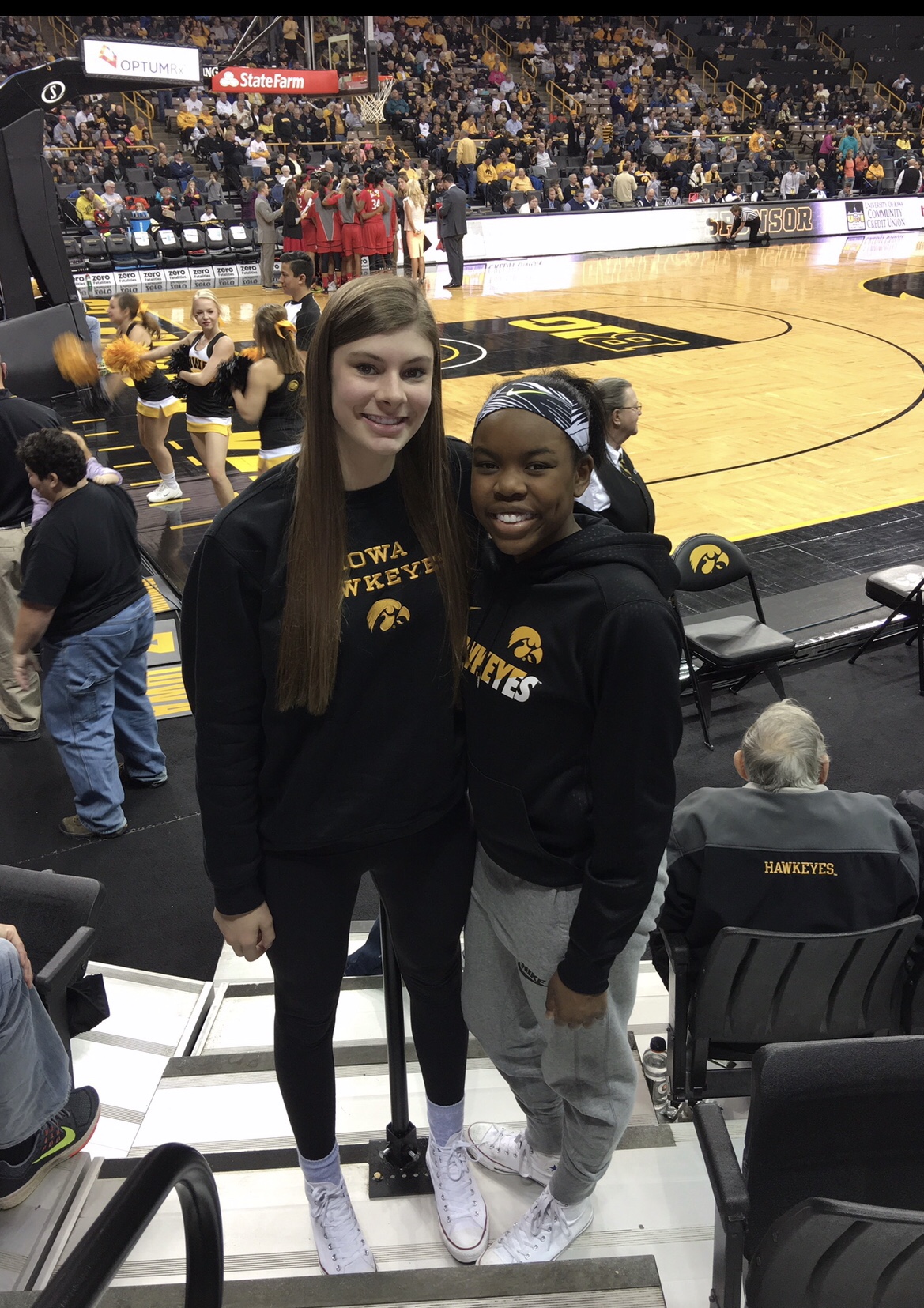
However, after a couple years I adapted to the style play and in short, I fell in love! Basketball has given me some of my favorite memories, as well as some of my favorite people. I began playing AAU basketball in the 3rd grade and played through my 11th grade year. AAU basketball gave me the opportunity to travel and play against some of the best competition in the country. It also gave me the oppurtinity to be seen by colleges. My recruiting process began in the 7th grade with an offer from Indiana Univeristy, and quickly took off from there.

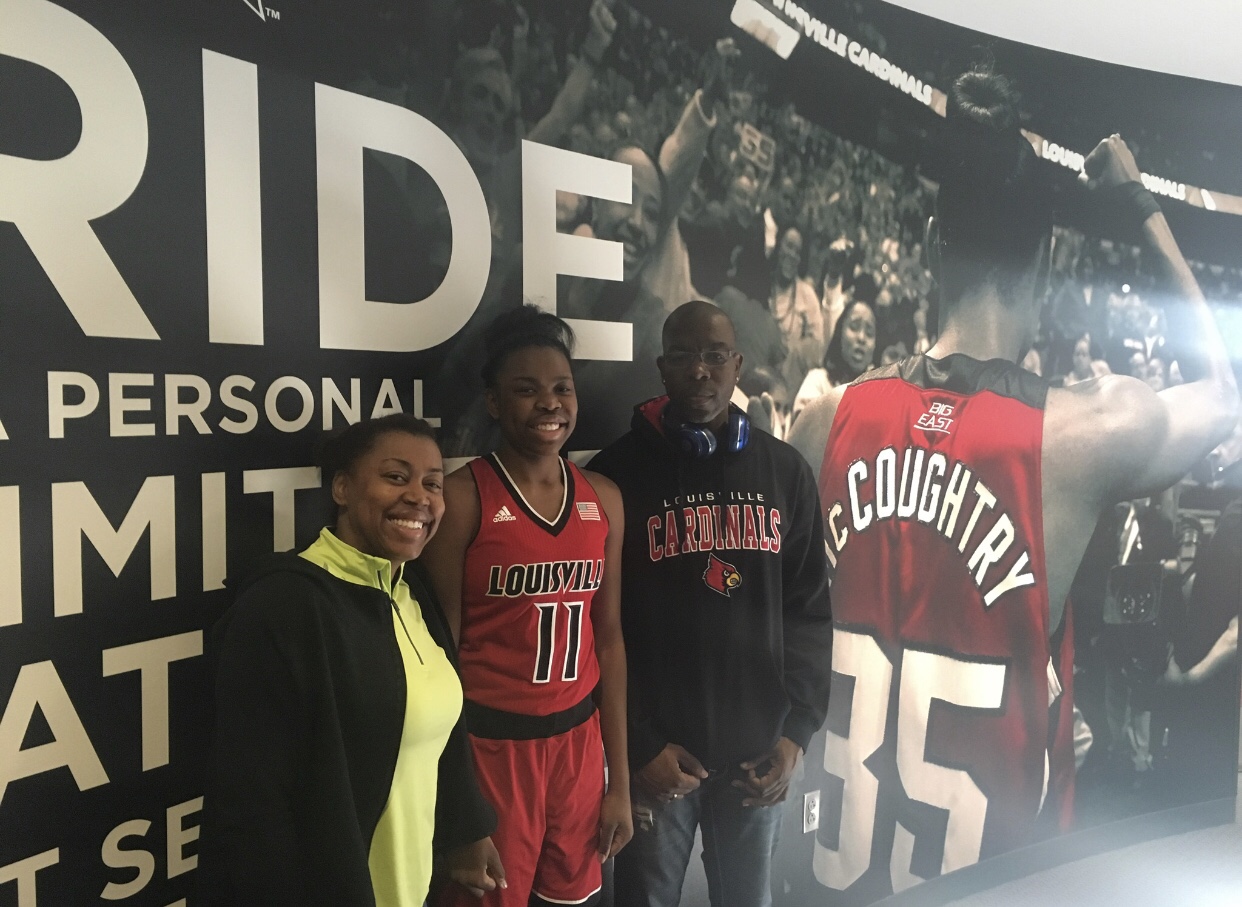
The summer before my junior year I verbally committed to the University of Maryland, and signed my national letter of intent the fall of my senior year… Leading me here! I am currently a freshman on the women’s basketball team. In additon to basketball I also enjoyed hanging out with my teammates, painting, reading and listening to music.

I am very interested in how media can develop both societal and political movements. Movements like black lives matter and me too have not only developed into globally known trends, but have also helped thousands of people with development of political policy. Knowing that media has the ability to change the narrative surrounding different components of life is something I find both interesting and awesome. To further my knowledge in this I have some core questions: How does media allow for people to reach others on a mass scale? What steps are necessary to develop a social media movement?

Design a site like this with WordPress.com
Get started