Tweet. Post. Blog. Share. Like. All verbs that have become very popular within the past decade of society. All verbs that will continue to grow in prevalence as time moves forward. The source of their significance? Social media. Defined as a place as websites or applications in which people can share content quickly and efficiently, social media has made its mark on almost every aspect of our everyday lives. It provides individuals all across the globe with forums in which they can communicate by removing communication boundaries. These new platforms were designed with the intent of fostering creativity and collaboration, allowing individuals to build community amongst people on a broader scale and share their thoughts, ideas and experiences with the world. Globally 4.5 billion people access the internet, and of that immense population, 3.8 billion people use social media. Put into perspective: roughly 50% of the world’s total population are operating on social media. Tweeting, posting, blogging, sharing, liking. 
As the extensiveness of this form of networking continues to grow, so does the controversy behind it’s existence and role in our everyday lives. Questions arise from people regarding the initial intent of these platforms, versus the actual purpose they serve in society. As an adamant social media user myself (yes, millennial guilty as charged) I have always been curious as to what the actual effects social media has on daily life. This post will attempt to lay out that effect by focusing on the pros and cons of social media in 3 separate sectors of life: politics, economics, and society as a whole. I hope by the end of this you will gain an understanding of not only the opportunities social media provides, but the ramifications that are included in this mass networking system.
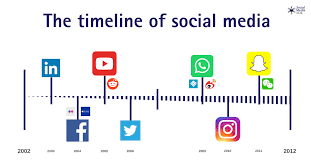
However, before we get into the significance social media plays in today’s society, it is important to understand the history of social networking entirely. Contrary to popular belief (and the image I have inserted just to the left of this text), social media didn’t start with LinkedIn and Facebook. The groundworks for social networking began hundreds of years ago when communication across large distances originated. Here is a brief timeline of the development of social networking into social media:
- The earliest postal system was created in 550 B.C by the King of Persia, Cirus the Great. From there, the presence of mailing systems continued to grow.
- By the mid 1800’s the telegraph was developed by Samuel Morse, which allowed messages to be transmitted across large distances much faster than postal systems
- 1867, Alexander Graham Bell invented the telephone which allowed people to communicate across distances promptly.
- In the 1940s the first super computer was invented, which evolved into personal computers in the 1970’s
- In 1969 the first ever network link was created
- 1978 was the first ever email
- 1997 the creation of the first true social media site: Six Degrees
For a lot, the creation of social media in the late 20th century was considered to be a turning point in communication, networking, and media. The shift in method of communication triggered a transition from analog to digital methods that allowed for the convergence of media, communication and computing industries. In other words: the creation of social media joined together a lot of components of life into one networking system. In the beginning parts of the 21st century social media increased greatly in popularity, largely due to the development of platforms like myspace and facebook. After its creation in 2004, Facebook became the world’s most popular social media platform by 2008. As of 2010, Facebook had more than 500 million users. Today, the amount of social media applications is large, inclusive with platforms that cover every aspect of daily life. However, the “Big Six” social media platforms are: Pinterest, Twitter, Facebook, Instagram, Snapchat, and LinkedIn. 
Now that we have a basic understanding of the background of social media, it’s time to tackle the effects it has on varying aspects of life. First up: Politics.
Relevance of social media has grown immensely since it’s creation, and part of the reason it has is because it is informative. It allows individuals to receive and gain an understanding for knowledge they otherwise would not have access to. But, does it really? Most notably through the platforms Twitter and Facebook, Social media has played a huge part in politics these past 10 or so years, especially during campaigns. In 2012, 2 in 5 Americans reported that they used social media for political purposes during the election. Beit to gain information or insight on a candidate, or to promote those they have chosen to support, there was an increased reliance on social media for political views. Now, social media can be an effective tool for politicians to use, especially during elections. On the positive side it allows for the recruitment, motivation and empowerment of supporters. It provides an opportunity for candidates to reach a broader range of people, and can be utilized to provide feedback and analytics for politicians. However, on the flipside social media can be a playground for fake news. The creation, development and sharing of fake information can potentially ruin an entire campaign for a candidate. Additionally, social media can lead to issues with professionalism amongst those in political power. As we have seen recently, these platforms can allow for the distribution of memes and inappropriate, impulse statements. They lack the professionalism that formal conferences and statements have.
The second sector of life that is heavily influenced by social media is the Economy. In my opinion, social media provides for more opportunities than obstacles in the economic sense. The use of networking through these platforms allows for individuals to build community amongst themselves. This sense of collaboration can often turn into innovation once like-minded people have connected. It allows for the foundation to be built for a participatory economy, meaning individuals are actively being both consumers and producers amongst themselves. Additionally, social media facilitates the growth and development of networks amongst employers and employees. This is most notably done on the platform, LinkedIn. LinkedIn is a database in which you post your profile, which is inclusive with past job experience, a resume, reviews from past employers, interests, and other characteristics about yourself. From there, you make connections with people, and build your network. The expansion has led millions to job opportunities. On a business-consumer level, social media provides immense marketing opportunities. Through these platforms companies can promote the name of their business/brand, as well as the products of services they provide. It permits a broader reach of marketing to consumers, while also allowing for an easier ability to locate target markets. However, while I believe them to be few, there are some cons to social media for businesses. Like politics, there can be the spread of false information surrounding businesses and brands, which can tarnish the entire reputation of a company. Social media marketing can be tedious and time consuming, especially if the correct number of interactions isn’t being met. 
Now, for the last proponent of the effects of social media we’ll focus on society as a whole. How are people affected on a personal level? What repercussions do these platforms have on health, both mentally and physically? What pros and cons does it offer for daily life? To begin with, individuals who support social media are quick to highlight the fact it offers platforms in which people can access news quicker and more efficiently. In fact, 59% of twitter users and 31% of facebook users admitted to turning to these platforms for breaking news. However, of that amount, 64% of the twitter users reported that they have come in contact with false information in their time on the app. 16% admitted to sharing the news they encountered. 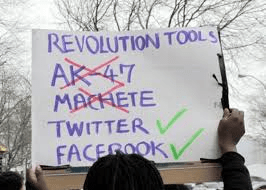
In terms of academics, heavy social media users have proven to have lower grades in school. However, social media allows for students to discuss academic topics through the use of its platforms. It can be used as an educational tool, not only for high school students, but for people across the world. Social media can be used to raise awareness for injustice, most notably done in the United States with the #BlackLivesMatter movement. It can be used to reduce stigma and raise awareness for issues like sexual assault, in the MeToo movement. However, it can be addictive and can decrease actual human interaction. It can create delusion through comparison, which can result in body image and self-esteem issues.
As of today, social media plays a viable role in almost every aspect of our everyday life and all evidence points towards an increase in that role. Whether you support it or not, social media will continue to grow in prevalence amongst a multitude of components of life. The facts prove that there is no question in that reality. So what should we question? I believe going forward it is important to focus on the questions that matter. How do we work towards decreasing the cons social media provides? How do we do so in a manner that allows for use to sustain or increase the pros? What’s next? If not, the repercussions of these networks will continue to grow, just as their presence does. And as the fake news spreads and body image issues continue to arise, we’ll continue to be stuck in the same spot… Tweeting, posting, blogging, sharing, liking.
 Zoe's Journalism Blog